Three birthday cards, one stamp each
Back from CKC Lancaster, where we ran make-and-takes at the booth with Concord & 9th Turnabout stamps. They are about my favourite thing to work with — you are making your own background paper, and you choose the colours.
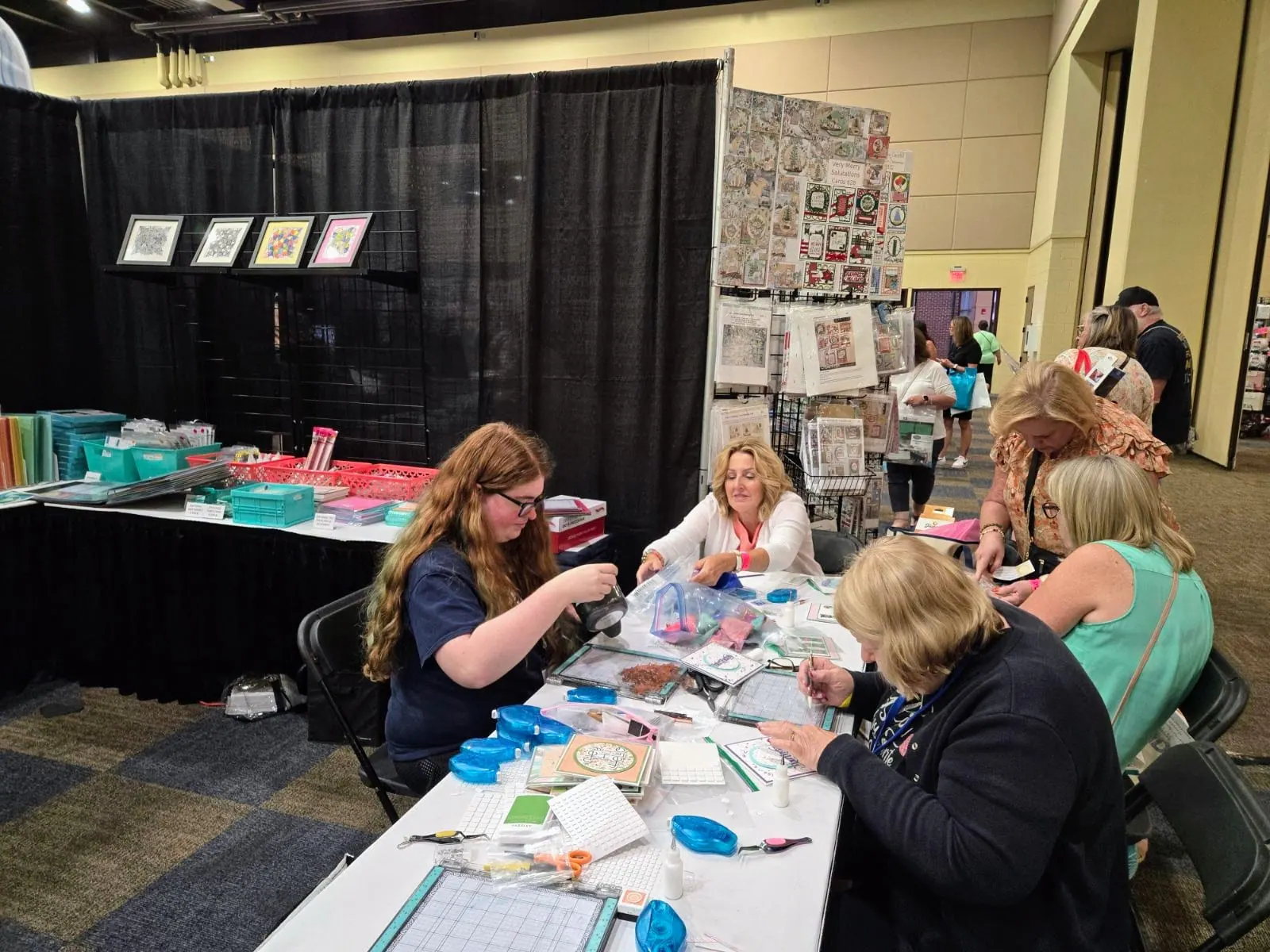
I just got back from CKC Lancaster, where we had make-and-takes at our booth using Concord & 9th Turnabout stamps. These are just about my favourite product to work with, because they give you a beautiful result — essentially you're creating your own background paper, and you can customise it with different colours.
How a Turnabout works
A Turnabout needs a stamping platform, such as a Misti. The paper you stamp on should be square, so that each rotation lands in the same place. You rotate the paper ninety degrees, up to four times, inking a different colour each time, until you have full coverage.
The thing nobody tells you is that a photopolymer stamp is pliable, which means it moves. You have to be patient: adjust the cardstock, wait before you ink up the next colour, close the door of the Misti and look — do the gifts and the bows actually line up? — and only then stamp.



What to buy, if you're buying one
My advice when you're deciding: think about the difficulty of the pattern, and think about how versatile the stamp will be. A tight design looks impressive and will test your patience. An open one is more forgiving and you will use it more often.
- You need a stamping platform. Without one, the rotations will not register.
- Cut your panel square before you start, not after.
- Choose one of your inks to sit back. Three loud colours read as noise.
- Check the alignment with the platform door closed, before every colour.
All projects
August 2024
New projects are added to the top of this list as they’re posted.